

Pearl Dental Blog

What Should I Do if I Have a Dental Emergency After Hours in Culver City?
Waking up at 2 AM with a throbbing toothache or losing a filling during a late dinner can feel incredibly isolating. Dental crises have a way of happening exactly when your neighborhood clinic has flipped its sign to “closed.” While the immediate reaction is often panic, the next few hours are the most critical for saving your tooth and preventing a minor fracture from becoming a systemic infection. Managing a crisis effectively requires a balance of immediate home care and knowing exactly where to turn for professional intervention.
Dental emergencies rarely resolve on their own. In fact, a localized infection or a cracked root can escalate quickly, leading to swelling that affects your ability to breathe or swallow. This is why having a plan for an emergency dentist in Culver City is vital for anyone living or working near the Westside. Whether you are dealing with a knocked-out tooth from a weekend game or a sudden abscess, the steps you take before you reach the dental chair dictate the long-term success of your treatment.
Assessing the Severity: Is It a True Emergency?
Not every dental mishap requires a midnight trip to the clinic, but many do. Distinguishing between “can wait until Monday” and “needs help now” is the first hurdle. A true emergency usually involves uncontrollable bleeding, severe pain that prevents sleep, or a permanent tooth that has been dislodged. If you’ve chipped a tooth but aren’t in pain, you can likely wait until the morning. However, if that chip is accompanied by a sharp, radiating pain or a fever, the tooth pulp might be exposed or infected.
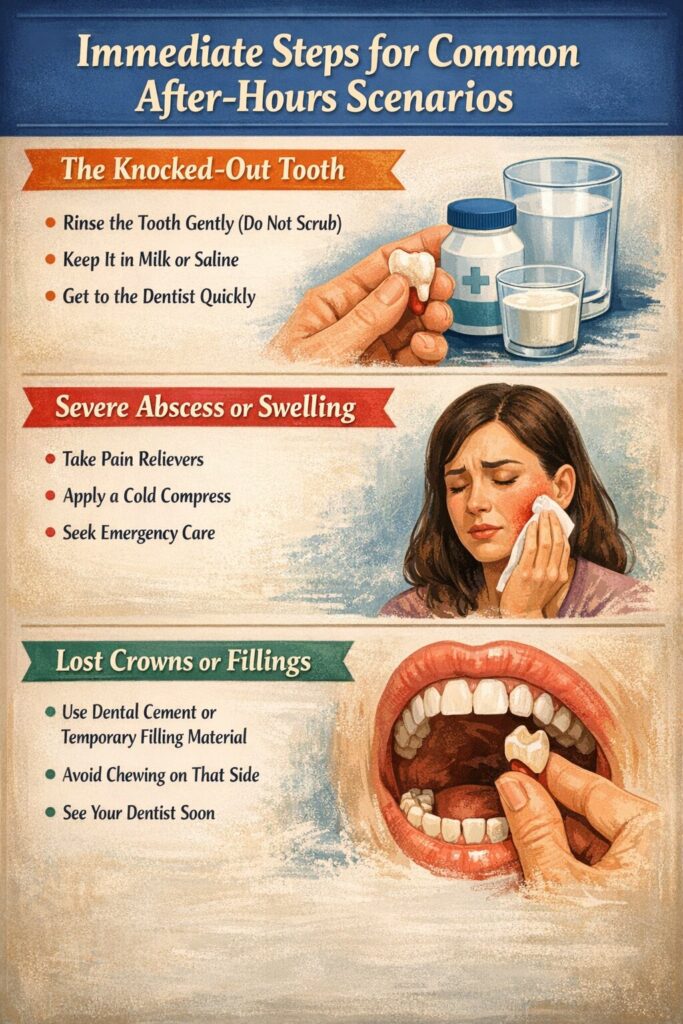
Immediate Steps for Common After-Hours Scenarios
- The Knocked-Out Tooth: This is a race against time. If your tooth is knocked out, handle it only by the crown (the chewing surface), never the root. Rinse it gently with water if it’s dirty, but do not scrub it or use soap. If possible, try to place it back in the socket and bite down gently on gauze. If it won’t stay, submerge it in a small container of milk or a tooth preservation kit. You have a roughly 60-minute window for the best chance of re-implantation.
- Severe Abscess or Swelling: A dental abscess is a pocket of infection that can spread to the jaw, neck, or other parts of the body. If you notice a pimple-like bump on your gums or significant facial swelling, contact an emergency dentist in Culver City immediately. Do not attempt to pop the abscess, as this can force the bacteria deeper into your tissues.
- Lost Crowns or Fillings: While rarely life-threatening, a lost crown can be incredibly sensitive. You can use a small dab of dental adhesive or even sugar-free gum to temporarily “plug” the area to protect the nerves from air and temperature changes. Avoid using superglue or other non-dental household adhesives, as they can damage tooth structure and irritate the soft tissue.
Managing Pain Safely at Home
While you wait for your appointment, managing discomfort is the priority. Over-the-counter anti-inflammatories are generally more effective for dental pain than standard pain relievers because they target the swelling around the nerve. Applying a cold compress to the outside of the cheek for 15 minutes on, then 15 minutes off, can also help numb the area and reduce inflammation. Avoid placing aspirin directly on the gums; it is a common “folk remedy” that can cause chemical burns on the delicate oral mucosa.
Source: Emergency Dental Care USA
Protecting Your Smile from Future Accidents
Prevention is the best medicine, though it’s cold comfort when you’re currently in pain. If you play contact sports, a custom-fitted mouthguard is a small investment that prevents thousands of dollars in restorative work. Similarly, keeping a small dental emergency kit in your car or home—containing gauze, a small container with a lid, and some saline—can make a chaotic situation much more manageable.
Reach Out for Immediate Relief
Ignoring a dental crisis only leads to more complex and expensive procedures later on. At Pearl Dental, we understand that dental trauma is stressful, and we are committed to providing swift, compassionate care to the Culver City community. If you are experiencing severe pain, swelling, or have suffered an injury to your teeth, don’t wait for the symptoms to worsen. Contact us today or call our office to secure an emergency evaluation and get your oral health back on track.
People Also Ask
Can I go to the Emergency Room (ER) for a dental emergency?
While an ER can provide antibiotics for infections or stitches for soft tissue lacerations, most hospitals do not have a dentist on staff. They can stabilize your pain, but they cannot perform extractions, root canals, or fix broken teeth. For those procedures, you must see a dental professional.
How do I know if my toothache is an infection?
Signs of an infection (abscess) include a persistent, throbbing ache, sensitivity to hot and cold, fever, swollen lymph nodes under your jaw, and a foul taste in your mouth. If the pain suddenly stops, it might mean the nerve has died, but the infection is still present and needs treatment.
What should I do if my child has a dental emergency at night?
Remain calm, as children mirror your stress. If a baby tooth is knocked out, do not try to put it back in, as this can damage the permanent tooth underneath. For permanent teeth, follow the same “milk storage” steps as adults and call a pediatric-friendly dentist immediately.
Is a cracked tooth always an emergency?
It depends on the depth. A “craze line” (a tiny surface crack) is usually cosmetic. However, a fracture that extends toward the gum line or causes pain when biting requires urgent care to prevent the crack from splitting the tooth entirely, which would necessitate an extraction.