
Pearl Dental Blog

How Anemia Affects Your Oral Health: Insights from a General and Cosmetic Dentist
Most people think of anemia as a condition that causes fatigue, dizziness, or shortness of breath. But what many don’t realize is that anemia can also leave clear signs inside your mouth.
As a general and cosmetic dentist serving El Segundo and the surrounding South Bay communities, we often notice oral changes that point to underlying health concerns. Your mouth can act like an early warning system. If you’ve been feeling unusually tired and also noticing changes in your gums, tongue, or overall oral comfort, the two could be connected.
Let’s break it down in simple terms—and talk about what you can do about it.
What Is Anemia?
Anemia occurs when your body doesn’t have enough healthy red blood cells to carry oxygen efficiently. The most common type is iron-deficiency anemia, but it can also result from vitamin B12 deficiency, chronic illness, or other medical conditions.
Because oxygen is essential for tissue health, low oxygen levels can affect your gums, tongue, and the healing ability of your mouth.
If you’ve recently searched for a Cosmetic Dentist El Segundo residents trust for comprehensive care, it’s important to know that oral health isn’t just about your smile’s appearance—it’s closely tied to your overall wellness.
How Anemia Shows Up in Your Mouth
Anemia doesn’t just make you feel tired. It can create visible and uncomfortable oral symptoms.
1. Pale Gums
Healthy gums usually appear pink and firm. Anemia can cause them to look pale or almost white due to reduced red blood cell levels.
If you’ve noticed a sudden change in gum color, it’s worth having it evaluated.
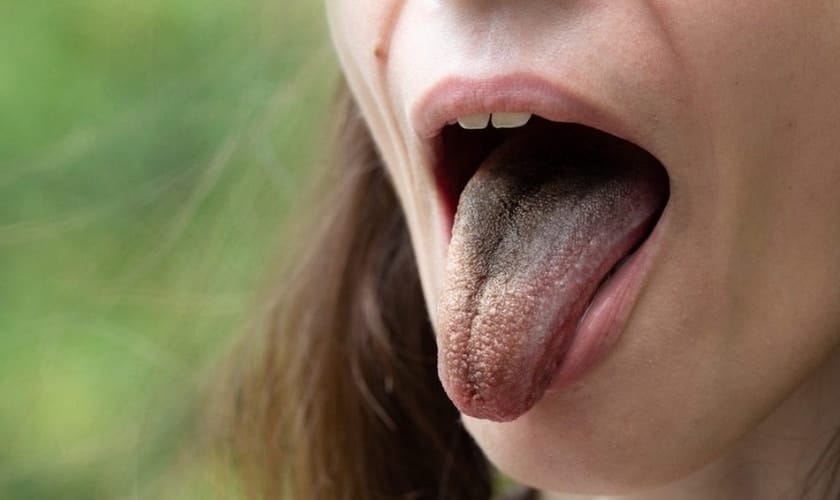
2. A Smooth or Sore Tongue
A condition called glossitis (inflammation of the tongue) is common in people with anemia. The tongue may:
- Look smooth or shiny
- Feel tender or swollen
- Appear red or unusually pale
- Develop a burning sensation
Some patients describe it as their tongue feeling “too big” for their mouth.
3. Mouth Ulcers or Cracks at the Corners
You might experience:
- Frequent canker sores
- Cracks at the corners of your lips (angular cheilitis)
- Slow healing after minor oral injuries
If cuts or sores seem to linger longer than usual, anemia may be a contributing factor.
4. Increased Gum Sensitivity
Low oxygen levels can weaken gum tissue, making it more sensitive and more prone to inflammation. You may notice:
- Tenderness when brushing
- Bleeding gums
- Heightened sensitivity to hot or cold
Source: Medical Centric Podcast
Why Early Detection Matters
In El Segundo, we see many busy professionals commuting to LAX, aerospace employees, and active families balancing work and school schedules. Fatigue is often brushed off as “just stress.”
But when we notice oral signs of anemia during a routine exam, it can prompt a referral to your primary care physician for blood testing. In many cases, dental visits are how patients first discover they’re anemic.
Your routine dental appointment can be more powerful than you think.
How Anemia Impacts Cosmetic Dental Results
If you’re considering teeth whitening, veneers, or other smile enhancements, underlying health matters.
Anemia can affect:
- Gum healing after cosmetic procedures
- Sensitivity levels
- Overall tissue health
- The appearance of your gum line
Before starting cosmetic treatments, a thorough evaluation ensures your smile makeover is built on a healthy foundation. A trusted Cosmetic Dentist El Segundo patients rely on will always look beyond aesthetics to ensure your oral tissues are strong and stable.
Local Lifestyle Factors That May Contribute
Living in El Segundo and the South Bay area comes with a fast-paced lifestyle. Here are a few local habits that can increase anemia risk:
- Skipping meals due to long work hours
- Heavy coffee consumption without iron-rich foods
- Vegetarian or vegan diets without proper supplementation
- Intense fitness routines without balanced nutrition
If you frequent local gyms near Main Street or grab quick lunches between meetings, it’s easy for nutrition to take a back seat.
Iron-rich foods to support oral and overall health include:
- Spinach and leafy greens
- Lean red meats
- Beans and lentils
- Fortified cereals
- Nuts and seeds
Pairing iron-rich foods with vitamin C (like oranges or bell peppers) helps improve absorption.
What to Do If You Notice Symptoms
If you suspect anemia may be affecting your oral health:
Step 1: Schedule a Dental Exam
We evaluate:
- Gum color and condition
- Tongue texture
- Healing patterns
- Signs of inflammation
Step 2: Seek Medical Testing
If anemia is suspected, we’ll recommend seeing your physician for blood work to confirm iron or vitamin deficiencies.
Step 3: Follow a Coordinated Care Plan
Treatment may include:
- Iron or B12 supplements
- Dietary adjustments
- Improved oral hygiene routine
- Professional cleanings to support gum health
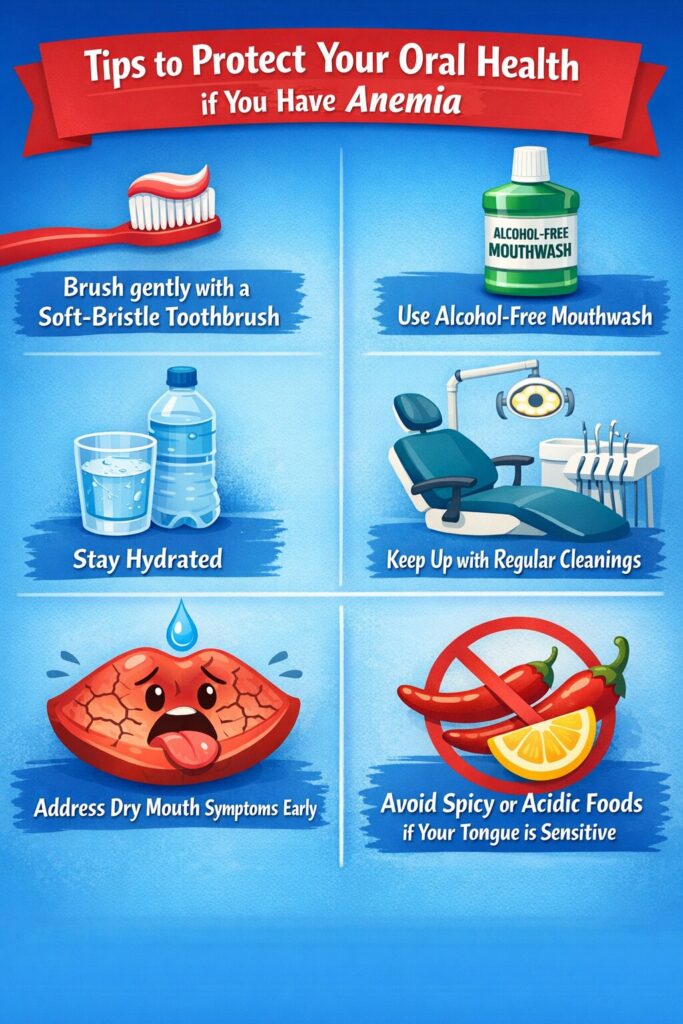
Tips to Protect Your Oral Health if You Have Anemia
- Brush gently with a soft-bristle toothbrush
- Use alcohol-free mouthwash
- Stay hydrated
- Keep up with regular cleanings
- Address dry mouth symptoms early
- Avoid very spicy or acidic foods if your tongue is sensitive
Consistency makes a big difference in preventing complications.
Common Questions Patients Ask
Can anemia cause bleeding gums?
Yes. While bleeding gums are often linked to gum disease, anemia can make gum tissues weaker and more prone to bleeding.
Will treating anemia improve my oral symptoms?
In most cases, yes. Once iron or vitamin levels are restored, symptoms like tongue soreness and gum paleness typically improve.
Can I still get cosmetic dental work if I have anemia?
Yes, but it’s important to stabilize your condition first. Proper healing and gum health are essential for long-lasting cosmetic results.
How often should I see the dentist if I’m anemic?
Regular six-month visits are usually sufficient, but your dentist may recommend more frequent checkups if gum inflammation or healing issues are present.
Why Local Dental Care Makes a Difference
Choosing a Cosmetic Dentist El Segundo residents trust means choosing someone who understands the local community and its lifestyle.
From beachgoers spending time at Dockweiler to professionals working in the aerospace corridor, our patients have unique daily habits that affect their oral health. Personalized care ensures treatment plans fit your real life—not just textbook recommendations.
We focus on prevention, early detection, and cosmetic excellence—because a healthy smile always looks better.
Small Signs. Big Impact.
Your mouth tells a story about your overall health. Pale gums, a sore tongue, or frequent mouth ulcers aren’t just minor inconveniences—they can be signals your body needs attention.
Ignoring them may allow both dental and systemic issues to progress.
The good news? Anemia is treatable. And when addressed early, your oral health can fully recover.
Take the Next Step Toward a Healthier Smile
If you’ve noticed changes in your gums, tongue, or overall comfort—or if you’re planning cosmetic treatment and want to ensure your foundation is healthy—it’s time for a professional evaluation.
At Pearl Dental in El Segundo, we combine general and cosmetic expertise to protect both your health and your smile’s appearance. Our team provides personalized, comprehensive care designed for the South Bay community.
Don’t wait for symptoms to worsen. Book your appointment today.